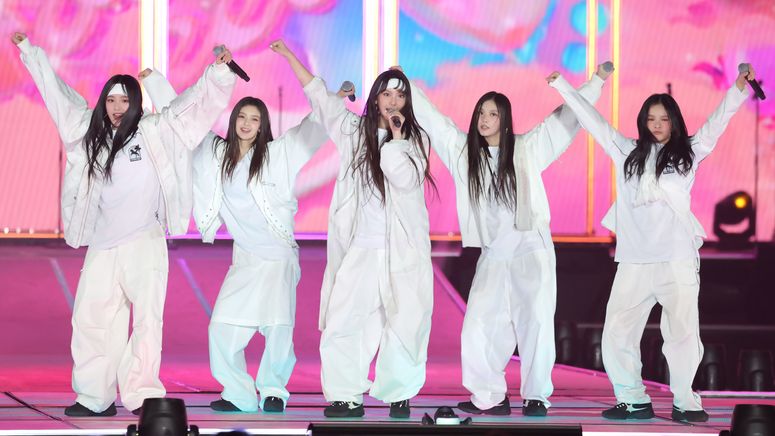
Last year, NewJeans staged a revolt over strict contracts that challenged the foundations of the K-pop industry. Their case, against the HYBE label ADOR, hinged on the claim they had suffered “significant negligence” at the hands of their employers. ADOR beat them in court and proceeded to fire Danielle Marsh from the band; her lawyer said the label was punishing her for the attempted mutiny. Now, ADOR is pursuing millions in damages from Marsh for breach of contract. But questions remain over the severity of the conditions to which ADOR subjected NewJeans—a battery of brutal training regimes and unusually strict personal terms that are laid out in a new report from The New York Times.
The harsh reality of K-pop contracts is no secret. So notoriously gruelling are the demands on trainee idols that the Korean government has a contract template to forestall the most inhumane conditions. But labels are free to stray from its recommendations, and ADOR made several key changes, multiple experts told The Times. Standard language from the template—guaranteeing rights to education, physical and mental health, and other protections against child labor—was omitted from NewJeans’ contract, signed when the members were aged 14 to 17. Their parents accepted the terms. But when the mother of one member requested changes, ADOR’s vice president responded, in an email obtained by The Times, “If you do not agree to the current contract draft, including the points above, it may be best to reconsider the contract itself.”
In the lead-up to the band’s debut in 2022, ADOR drilled the young NewJeans members with little respite, the report suggests. Four of the five members dropped out of school. They often rehearsed late into the night, sometimes until 2 a.m., and breaks were discouraged, sources told The Times. (HYBE said it fully complies with child-protection laws, works hard to ensure performers’ safety, and does not pressure them to quit school or penalize them for resting.) The contracts gave the label the right to use A.I.-generated NewJeans voices indefinitely, whereas the government contract template returns rights to a performer for their name, image, and voice once the contract ends.
Other unusual restrictions in the contracts included bans on “insincere attitude,” “inappropriate romantic relationships,” and publicly stating “true or false facts” that could damage the label. Band member Hanni Pham nonetheless denounced ADOR for its treatment of her and her bandmates in a 2024 testimony to the Korean Parliament. Soon after, the band rebranded as NJZ and performed at ComplexCon in Hong Kong, in defiance of an injunction that a Seoul court granted to ADOR. But the rebellion was swiftly shut down as NewJeans—or NJZ—announced a hiatus in respect of the court order.
The strict contract terms meant insubordinate members could face massive lawsuits and fees. In terminating Marsh’s contract and suing her, ADOR alleged that her refusal to work—as well as unauthorized solo projects and photo shoots—broke the contract terms and cost the label some $22 million. The other NewJeans members remain under contract until 2029. Their latest activity is a video that ADOR posted last August, promising a “summer of NewJeans” that did not come to pass.