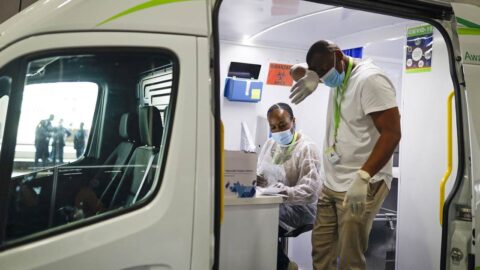
The outbreak has been identified as a rare type of Ebola caused by the Bundibugyo virus. Spread by bodily fluids, Ebola is highly contagious and often fatal — killing between 30% and 50% of those it infects — and causing symptoms such as fever, rash and vomiting, the WHO said.
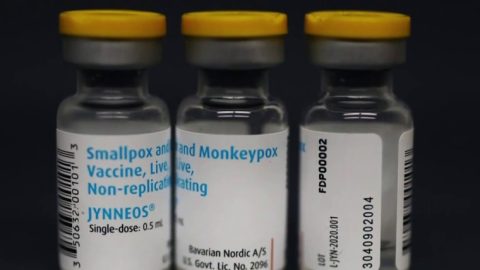
Unlike other types of Ebola, Bundibugyo has no approved vaccine or treatment.
The CDC has advised travelers who visited the affected countries recently to seek immediate medical attention if they develop fever, weakness, vomiting, diarrhea or unexplained bleeding.
Health officials and experts are concerned that this new outbreak was detected late.
Most cases are in Congo’s eastern Ituri province but it has since been found some 600 miles away in the capital, Kinshasa, and in Uganda, meaning officials do not have a clear idea of how far it might have spread.
Congo closed its land border with Rwanda on Sunday, the State Department said in a post on X.
“There are significant uncertainties to the true number of infected persons and geographic spread associated with this event at the present time,” the WHO said in a statement Sunday.
It also warned that it will be difficult to fight the virus’ spread in a region that has recently seen conflict between the Congolese government and the rebel group M23, whose captured city of Goma has also confirmed one case, according to its local administration.
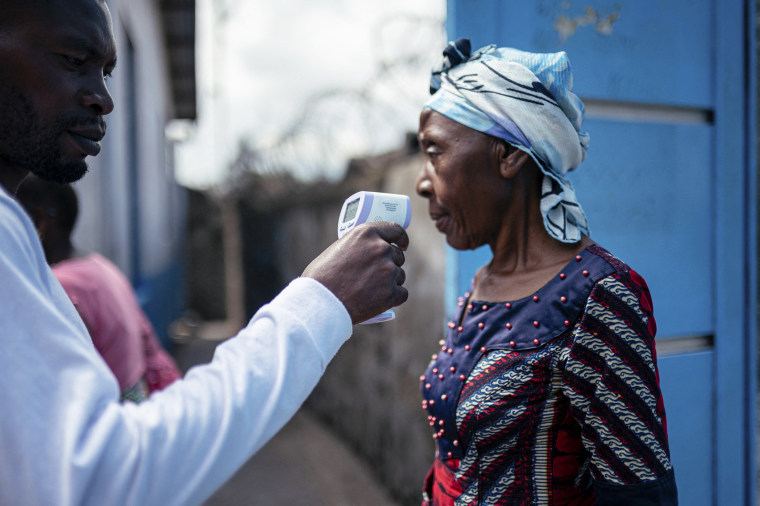
Jean Kaseya, director-general of the Africa CDC, told British broadcaster Sky News on Sunday that he was in “panic mode” due to a lack of medicines and vaccines as deaths rise.
The WHO’s emergency declaration means it is supporting governments and agencies’ attempts to combat the spread. Its regional office for Africa said Sunday on X that a team of 35 experts from the WHO and the Congolese Health Ministry had arrived in Bunia, the capital of Ituri province, along with 7 tons of emergency medical supplies and equipment.
The U.S. government is helping with “surveillance, laboratory diagnostics, infection prevention and control, and other outbreak containment efforts,” the CDC said Sunday.
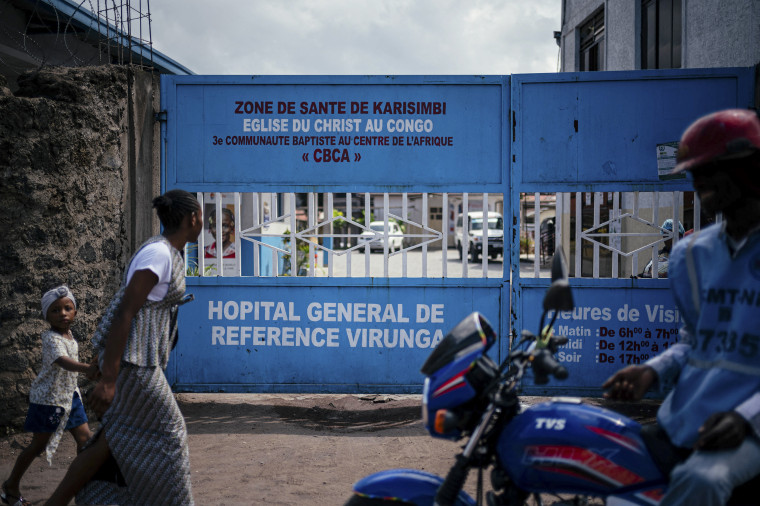
Meanwhile, the charity Doctors Without Borders, also known as Medicines Sans Frontiers, said it was “preparing to rapidly scale up our medical response” in the region.
“The number of cases and deaths we are seeing in such a short timeframe, combined with the spread across several health zones and now across the border, is extremely concerning,” Trish Newport, MSF emergency program manager, said in a statement.
“This is a scary one,” wrote Jeremy Konyndyk, who led the Covid-19 response at the now dismantled U.S. Agency for International Development.
Konyndyk, now president of Refugees International, said on X that during the mass Ebola outbreak of 2014-16, the largest in history with 28,000 cases, “USAID and CDC, supported by the US military, led the international response.”
But now “most of the international infrastructure that we relied on in past outbreaks … has been DOGE-d,” he added, referring to the Department of Government Efficiency, led by Elon Musk, which oversaw sweeping cuts to USAID and other agencies.
“USAID is gone and CDC is decimated,” he said.
The State Department said USAID cuts will not hamper the U.S. response.
“It is false to claim that the USAID reform has negatively impacted our ability to respond to Ebola,” a State Department spokesperson said. “In fact, by bringing USAID global health functions under the new GHSD bureau at the State Department, our efforts are more aligned and effective. Funding and support to combat Ebola continue, working with allies and partners, with additional announcements forthcoming.”
State did not immediately respond to a request for clarification on the status and number of Americans affected by the outbreak.
The U.S.is working with Congo and Uganda “to rapidly contain the virus,” a State Department spokesperson said, adding that the department was “working to rapidly mobilize support to key implementing partners.”