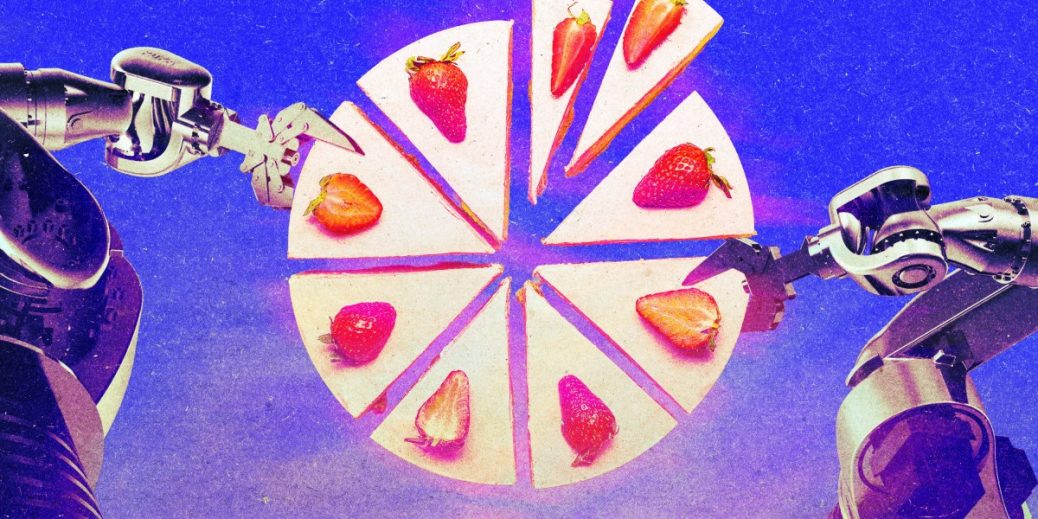
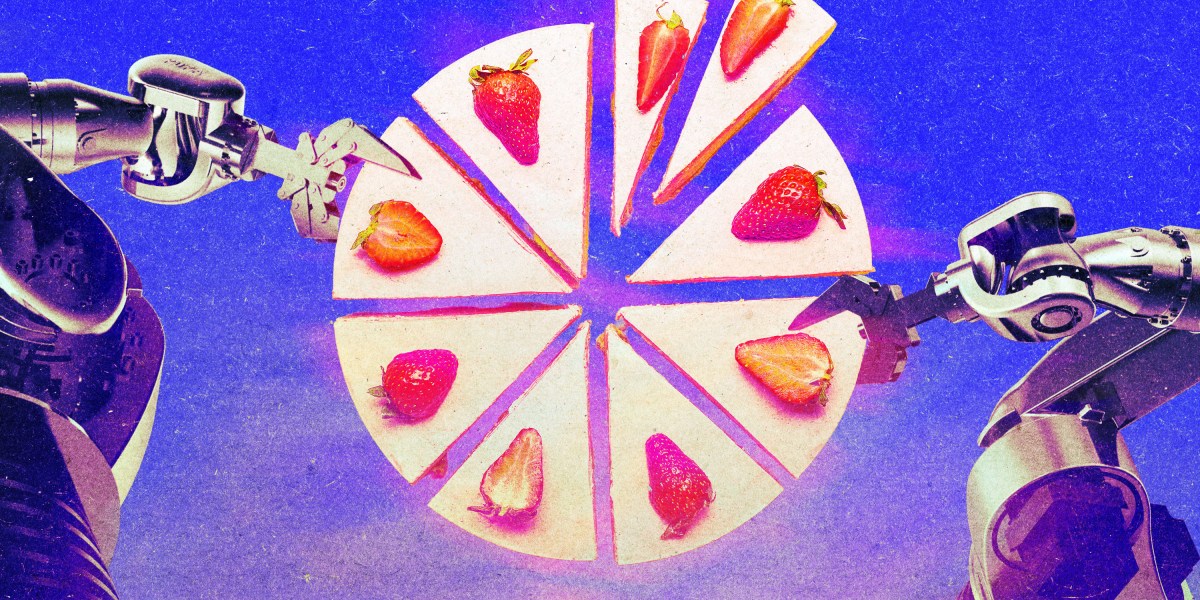
While game theory predicts how rational actors behave under particular rules, reverse game theory designs rules to elicit the behavior we want. Think of splitting a cake: if one person cuts it and the other gets first choice, the cutter has an incentive to make the portions equal.
Researchers believe the approach could align AI more closely with our rules and instructions. But big questions remain about whether these mechanisms will work in practice.
Here’s how reverse game theory could help make AI agents behave.
—Amit Katwala
Here’s who is falling in line for Trump’s “Super Intelligence” loyalty test
At the end of September, President Trump signed an executive order with just one directive: government agencies must rebrand artificial intelligence as “Super Intelligence.”
One month on, the rebrand is slowly appearing across government websites and documents, but it hasn’t caught on with everyone. Even some of the biggest names in tech still use “AI.”
But the bigger concern is the new term becoming a political loyalty test: Those who use it signal allegiance to the administration. Those who don’t become targets for attacks.