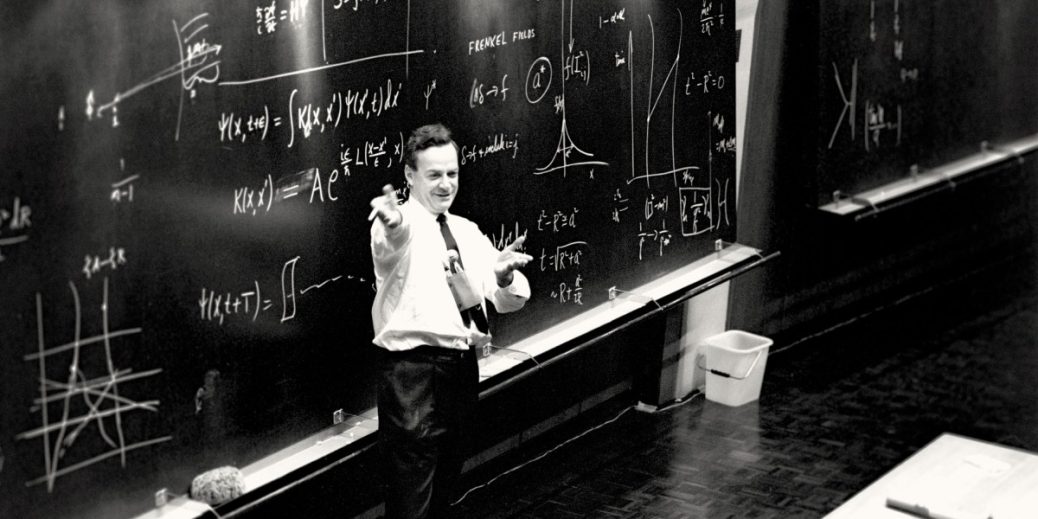
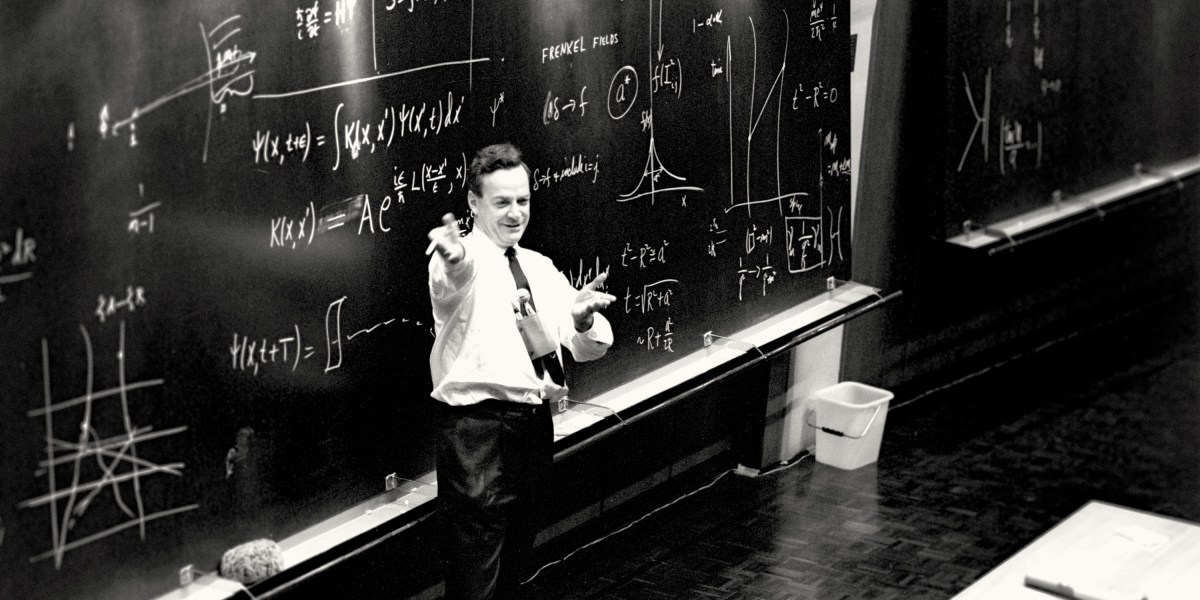
Narrowing the memory density gap, meanwhile, would mean building devices that use all three dimensions at molecular scale. The most concrete example is DNA, which stores information at the scale of its own atoms, and which biology has used as a storage medium for 4 billion years. Feynman, being conservative, guessed that a single bit would require a cube of 125 atoms. DNA holds it in about 30. What keeps DNA storage out of the data center is not its density but the cost and speed of writing it, still many orders of magnitude from anything practical. The library in a dust speck that Feynman imagined is permitted by physics and held back only by fabrication.
Communication sits about six orders of magnitude—just a factor of a million—from the Holevo limit, which is the threshold the industry will likely meet first. Interconnects are multiplying faster than the grid can power them, so the industry is moving to transmitters and receivers that use less energy per bit. Nvidia and Broadcom now ship optical interconnects built right against the silicon, so a signal leaves the chip package already on photons. Quantum computers, by comparison, are beginning to rely on interconnects that encode information on quantum signals, usually in the form of single photons. As classical interconnects spend fewer resources on each bit, they descend toward the regime where these quantum interconnects already operate. The Holevo limit is where the two will meet.
Between the floor and the ceiling
It is fair to object that a gap of 35 orders of magnitude is a mirage—that a limit so remote says nothing about what any real machine will ever do, and that pointing to it is like navigating by the horizon. The objection has teeth. Reversible logic, quantum computing, and DNA storage have each been perpetually 10 years away for 40 years. And it will likely never be practical to build a computer that uses all the energy in a lump of matter.
But these gaps are invitations. There is a ceiling, set by how much we can build: the number of devices we can fabricate; the power we can generate to run them; and the capital, land, and cooling water we can assemble into a single system. And there is a floor, set by how much a single joule, a single second, and a single gram of matter can be made to compute, store, or transmit. We can progress by building more or by approaching the floor, which means making each device do more with less.
These gaps are invitations. We can progress by building more or by approaching the floor, which means making each device do more with less.
For most of the last century, we proceeded down both paths together. We built more computers, and the computers themselves grew smaller and better. Now we mostly build more, and the ceiling is coming into view. A power grid can carry only so many gigawatts, and a region can spare only so much land and water. Yet every road map for what comes next is drawn from the same starting point: the machines we already have. Build more of them and you climb toward the ceiling; build better ones and you descend a little further, but only as far as the transistor’s own floor. There is a third direction. Start with a physics experiment operating at the floor and build up.
It has been done before. The transistor was a physics experiment before it was an industry; the laser was a laboratory curiosity before it carried the world’s conversations under the ocean; giant magnetoresistance went from physics discovery to the read head of every disk drive within a decade. In each case, the physics experiment came first and showed what was possible, and engineers then turned it into a machine that can be scaled up. Building the experiments that operate at these fundamental limits, and then scaling them up without losing that performance, is the work that remains. The next machines will not be reached by descent; they will be built from the bottom up. There is still plenty of room at the bottom.
Volkan Gurses is a postdoctoral researcher at MIT and a visiting researcher at Nvidia. He received his PhD in electrical engineering from Caltech. He studies the fundamental physical limits of information technologies and builds integrated circuits and systems that approach those limits.